The Post-MFA Doldrums

I waffled for years over the MFA possibility before I found myself checking into the dorms. With three novel manuscripts beyond the first draft stage under my belt, I knew I was disciplined enough to stick to a writing schedule, even as I remained committed to my official career. No, I wasn’t worried about discipline. In my daily life I was struggling with a sense of isolation as I interacted with educators and librarians, but very few writers. The MFA program offered through Pacific University provided the writing nest I craved, not to mention another genre to work on, and I didn’t look back.

Not only did a new pile of poems continue to grow on my computer, one instructor encouraged me to put a musical cover on Voice Break and publish it. While he was no doubt thinking of a chapbook, I decided to take the plunge with CreateSpace in order to produce a print-on-demand paperback. This process was so sustaining, I followed suit with a book that included “The Ballad of the New Carissa,” as I figured a traditional poem running close to 3000 words would be a challenging to place.

Now I’m in the post-MFA doldrums, trying to feed my writing life on my own once more, not to mention get work out there. Fortunately, one of my fellow students lives in the area, and we’ve started our own writing group. And I finally stepped foot into the San Diego Writers, Ink facility, an edgy loft in downtown San Diego where workshops are regularly conducted (I am currently taking a poetry class from Steve Kowit).

While I’ve had plenty of poems tucked away for some time now, I’d been avoiding the publishing process, because I was already burnt out from trying to publish my two of my novels. Yet after filing my diploma away, I figured my poetry writing degree would go to waste if I didn’t try to place some of my work. I just wasn’t completely sure of how to go about it.

I did get lucky in the beginning, so I decided to tackle the whole process methodically. I took a stab at entering as many contests as I could find (no wins yet). Then I decided to submit almost every viable poem I’d written to one journal or another. I quickly learned that I was indeed lucky with those first submissions. As the rejections came pouring in, I decided I should probably just submit my best poems (if only I could determine which ones those were). A bunch of these pieces are currently “pending response,” and many have already been rejected.

Duotrope, an online writing resource, has become indispensible in this whole process. Their submissions tracker, which costs $50 a year, allows writers to easily organize submissions in an online database. This service also provides invaluable, up-to-date, information on literary publications. With a few keystrokes, a writer can quickly determine where they’ve sent any given piece, as well as figure out how long a particular publication has held it.

Their weekly poetry newsletter has inspired me to try yet a third approach: to focus on journals soliciting themed submissions. Today, for example, I submitted poems to publications looking for poetry on Harbors & Harbor Towns, Rebirth, Sound, and finally, Trash and Treasure. We’ll see if this method increases my odds.

As for the novels, well… I’ve got to get back to them. When I entered the MFA program, I already possessed several file folders full of rejections on the first two. I was definitely fishing for a reason to continue as I focused on the joy of poetry writing in graduate school.

I’ve now had ample time to lick my wounds, so I figured it couldn’t hurt to enter my second novel manuscript into some viable young adult novel contests (it does feel good to get back to this). IMHO, my first novel needs to be completely revamped (on the to-do list). And the last one was never finished (also on the to-do list).

Ah, discipline.

It’s been almost a year since I’ve graduated from Pacific University, and I continue to feel a certain momentum egging on my writing life. Let’s see if it holds up.

The Importance of Literary Friendships

Some years ago I took an undergraduate class on poetry writing from Marilyn Chin at San Diego State University. At one point during the semester she extolled the virtues of having literary friendships, and we actually met one of her literary friends (whose name now escapes me). I was able to nod knowingly, as I’ve enjoyed a number of meaningful literary connections over the years. These are people with whom I’ve talked “writing,” exchanged manuscripts, celebrated successes, and—most of the time—commiserated.

Patricia Santana

Today I highlight one of these writers, Patricia Santana, who has played this role in my life more recently. We’ve had many lunch dates focused on writing, and we once exchanged second novel manuscripts (hers – Ghosts of El Grullo – has been published; mine hasn’t). To be sure, I don’t think I’d have much of a place in San Diego’s literary community without her influence. One time she invited a large group of local writers to her home for dinner, and I was lucky enough to be included.

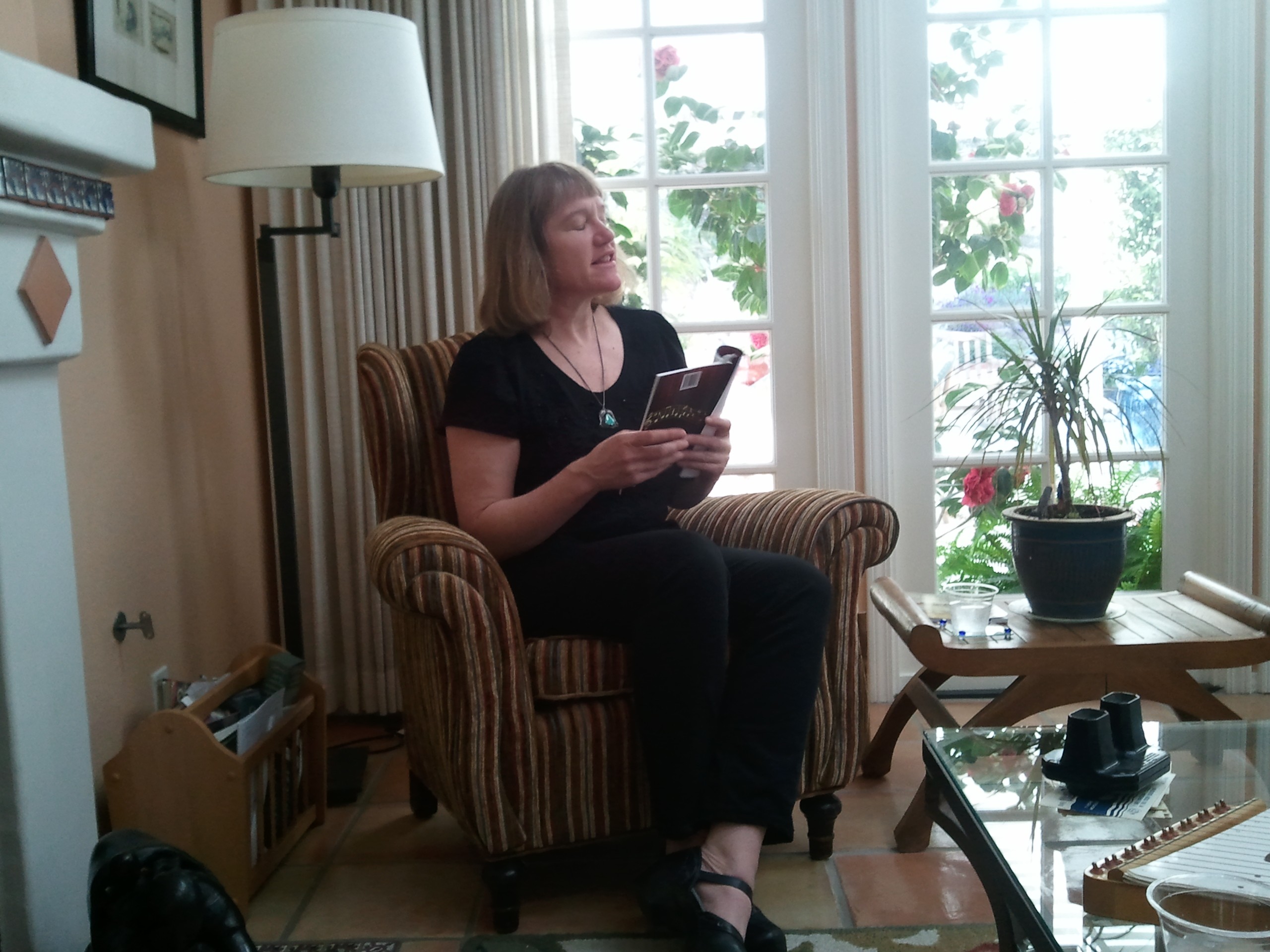
What has most touched me about Patricia, however, is the way she has supported me as I’ve brought out two volumes of poetry. Not only have I received encouraging feedback from her, she recently—of her own volition—hosted a reading for me and badgered our fellow colleagues to attend.

So I’d like to take this opportunity to emphasize her work, especially since she is currently writing a new novel, one that is sure to come out in a year or two. You can learn all about Patricia on her website: http://patriciasantana.net/

Image,

Book Trailer

Video

I dipped a toe in and created a book trailer for The Ballad of the New Carissa and Other Poems.

Check out San Diego’s own writers!

SDPL1

Some memories hold firm even as the context that once cradled them fades away. They rise on occasion, like a high definition video, and the viewer wonders about all she has forgotten. When I attended the 47th Annual Local Author Exhibit, hosted by the San Diego Public Library, the following memory surfaced.

It is 1988 and I am riding the escalator in Seattle’s downtown public library, which seems most cosmopolitan to this young woman who once found Eugene large in comparison to the places she had been. I am wearing pumps, hose, and a dress that looks like a business suit. It is a dress code I am expecting to adopt once I land my first professional job. As the steps of the escalator move toward the third floor, my nervousness peaks. I am about to face an interview that will eventually pave my way into Seattle.

SDPL2

I spent over twenty years working in four public libraries in four different cities before moving on to higher education. So maybe the old downtown library in San Diego, slated to be abandoned now that a new building is being prepared for its grand opening this summer, brought on the nostalgia. It is certainly reminiscent of the Seattle library I once knew before it was leveled so a spiffier building could rise in its place. Or maybe I’ve just lived through another high definition video, one that will eventually begin to play on demand. That day I rode the escalator felt like a new beginning—and so did this one.

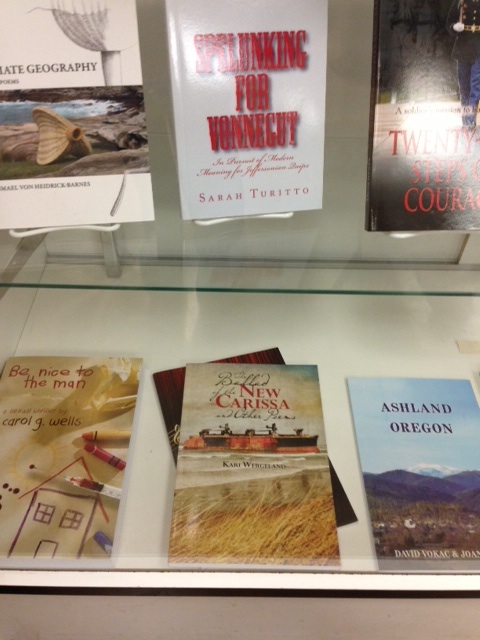
To be sure, my former colleagues in Seattle would have envied such a program, which was hosted for more than 400 writers who live and write in the greater San Diego area. Our books were placed on display on the main floor and will remain so throughout the month of February. Yes, we were treated to music, hor dourves, as well as a good inspirational speech by Judy Reeves, founder of San Diego Writer’s Ink, “the city’s premier writing center which anchors the literary community in the city and is a proud neighbor of the New Central Library.” Best of all, to me anyway, we were able to share the festivities with the library workers who organized the event on our behalf. SDPL4

Kudos to the San Diego Public Library!


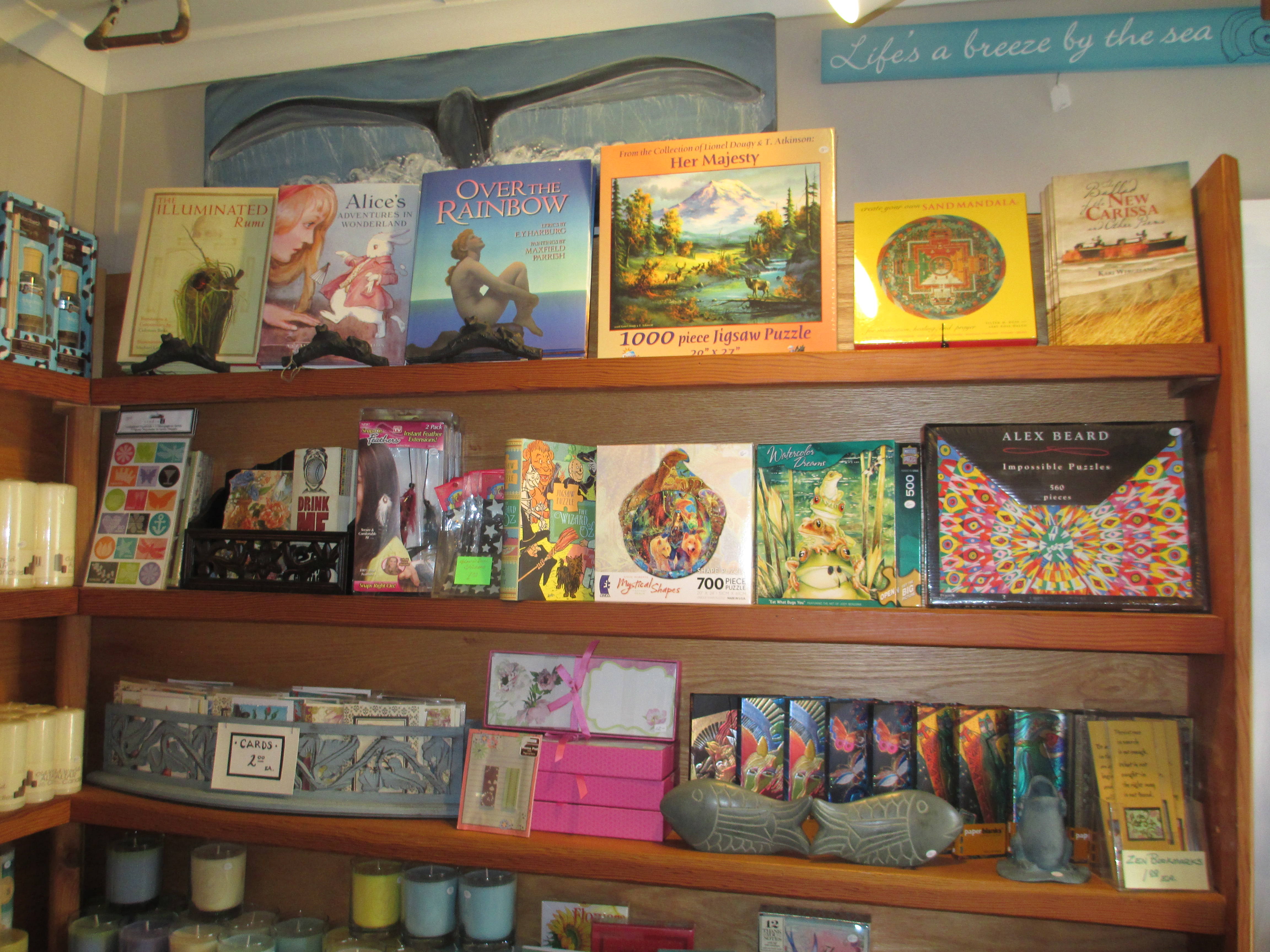
Copies of The Ballad of the New Carissa and Other Poems available through Toad Hall in Yachats

If you ever spend time on the Oregon Coast, you can find copies of my book at Toad Hall on 237 W 3rd Street in Yachats. Phone: 541-547-4044.
IMG_0790IMG_0780

Ship Salvaging Company Featured in “The Ballad of the New Carissa” Now Working on the Costa Concordia

Titan Salvage, the ship salvaging company founded by David Parrot, removed the stern of the New Carrisa during the summer of 2008. Their efforts are highlighted in the last part of “The Ballad of the New Carissa.”

Sadly, Mr. Parrot is no longer living, but his company continues to eliminate wrecked ships. They are currently in the process of trying to get rid of the Costa Concordia, the cruise ship that sank off the coast of Italy. To see the Titan team in action, watch this 60 Minutes segment, Costa Concordia: Salvaging a Shipwreck, with Lesley Stahl.

Lynn Neary Discusses Self-Publishing on NPR

According to Lynn Neary, self-publishing is becoming less stigmatized. Check out her story, Self-Publishing: No Longer Just A Vanity Project.

The Ballad of the New Carissa and Other Poems

The New Carissa freighter ran aground near Coos Bay, Ore., during a storm in 1999, creating a mishap of epic proportions that took years to clean up. This event is the inspiration for Kari Wergeland’s long ballad and title of her second book of poems, The Ballad of the New Carissa and Other Poems.

The book, available in paperback, can be purchased via Amazon.com and other online vendors, as well as Baker & Taylor and Ingram.

This is a collection of fearless poems celebrating the Oregon Coast in all of its magnificence. Wergeland is at home writing in both free verse and traditional poetic forms, as the book shows. Coastal scenes and the balance of inner landscapes and a marine exterior turn up in surprising ways—the pulse of the weather, shifting sands, and creatures in the sea and on the shore. Humans flirting with dangerous tides do not escape her scrutiny. The long titular ballad of Part 4 takes a narrative approach in re-telling the many overlapping stories of coastal life with a grounded, decaying freighter in their midst. In this volume, Wergeland offers up a rich panoramic segment of America’s Pacific edge.

Introducing Voice Break

Just as spring brings with it possibility and a fresh start, Kari Wergeland’s book Voice Break, available in a paperback edition ($9.99), delivers a poetic story of promise and wholeness.

Following the advice of a Lane Community College music instructor, Wergeland began taking voice lessons with a respected teacher at the age of 24. After roughly two years of study, with dubious results, she decided to stop singing. She began working as a librarian and eventually turned to writing newspaper articles, fiction, and poetry. Twenty years later, and on something of a whim, Wergeland enrolled in a workshop called The Natural Singer, with vocal coach Claude Stein. Inspired to resume voice lessons (through the Grossmont-Cuyamaca Community College District), it wasn’t long before she discovered her singing had changed. Voice Break is a long poem of possibility that tells the story of the author’s voice.

Voice Break on Display