Poem in The Rathalla Review

My poem, “Jugular,” has been published in The Rathalla Review.

Rolfing and Plantar Fasciitis

It’s tough to know when to throw in the towel on a physical activity that may be tearing up the body. While tennis or running or dance comes with benefits that can’t be measured, the time spent on activities such as these could very well be deducting time from some undefined pursuit meant to take place down the road. Engaging in a physical passion becomes a balancing act between resting in the joy of exertion and assessing the damage.

Some six years ago, at the ripe old age of 45, I wondered if I would have to curtail my hiking. I was camping in the Anza Borrego Desert with some friends, and we tackled Whale Peak, which is a modest, squat sort of peak, albeit a hill that offers impressive views. By the time we made it back to camp, we had put in close to 9 miles.

The next morning I could barely walk. I was in shock, harboring thoughts like, Already? My feet hurt, I was less able to keep up, and I wondered if I was going to become one of those people who could do little more than putter around the house.

While I never went to a doctor for an official diagnosis, a friend and former nurse suggested I might be dealing with plantar fasciitis. Plantar fasciitis, according to The Gale Encyclopedia of Fitness, “is a condition in which the plantar fascia–the arch tendon in the foot–becomes very painful, swollen, irritated, or inflamed when tiny tears occur on its surface.” It tends to develop in middle-aged people who have traditionally been very active. It can also be a problem for those who are overweight.

I started looking for solutions, and it wasn’t long before I encountered some useful advice, suggestions like: wear larger shoes, add inserts to cushion my feet, and stretch regularly (particularly the Achilles tendons, calf muscles, and hamstrings).

While all of this helped to some degree, I found myself scaling back. I let go of tennis, which was really bothering my feet, and I watched my hikes grow shorter. I began to exist inside a smaller box—I began to accept that fact. And I allowed myself to live with an out of shape feeling, which I hated.

Then last fall I tried to figure out – yet again – what I could do in order to stay fit. This time I tested the treadmill, with the hope that I could jog on it safely.

Things did not go smoothly. In the beginning I dealt with the expected getting-in-shape soreness. That I could accept. Yet my feet quickly became painful—I literally hobbled out of bed. And while the overall soreness went away after a couple of weeks, my feet kept screaming. Despair over the possibility that I was stuck with a sedentary lifestyle was sinking in fast.

Meanwhile, I’d been seeing a rolfer for several other trouble spots. I wasn’t expecting him to help me with my feet, but one day this dilemma came up in casual conversation. To my surprise, he immediately suggested he could work on it. He told me something else, too, something that really eased my mind. He said the pain was mainly due to lactic acid build up (the same phenomenon that causes overall soreness when a person returns to exercise after being inactive). This surprised me because my feet seemed so wobbly and sore—I thought I was dealing with a problem that was causing serious debilitation. I’d been backing off on everything, so that the pain would back off (so that I wouldn’t injure myself even further). But lactic acid? Well, I knew about that.

Rolfing, according to The Gale Encyclopedia of Alternative Medicine, is “a holistic system of bodywork that uses deep manipulation of the body’s soft tissue to realign and balance the body’s myofascial structure. Rolfing improves posture, relieves chronic pain, and reduces stress.”

It is a bit of a commitment. Most practitioners ask their clients to schedule a series of ten sessions, as rolfers employ a methodical process that eventually covers the entire body. In other words, each session builds on what was done during previous sessions.

I actually went through this series over ten years ago, but I’ve continued to see my rolfer for tune-ups. He’s particularly worked wonders on my cranky lower back. Because of this, I was happy to let him take on my feet.

He explained why he thought it would help. He believes manipulating the fascia in the feet helps to stretch it out, as well as relieve lactic acid build up. This all sounded well and good, but I didn’t expect much. I’d been grappling with this soreness, with mixed results, for too long.

I am pleased to note his treatments on my feet have delivered some remarkable results. I can now work out and feel normal – almost pain free – the rest of the time. Even better, I’ve resumed the sort of workout I enjoy doing, putting in 3.5 miles on the treadmill four to five times a week. I’m in shape again and no longer worrying about living a sedentary life (for the moment, anyway).

Of course, I never had an official diagnosis from a doctor, so perhaps I got it wrong about the plantar fasciitis. All I know is, the moment my feet touch the floor in the morning, I don’t notice them.

Atkins, William A. “Plantar fasciitis.” The Gale Encyclopedia of Fitness, Ed. Jacqueline L. Longe. Detroit: Gale, 2012. Health and Wellness Resource Center. Web. 15 Jan. 2014.

Wells, Ken R. “Rolfing.” The Gale Encyclopedia of Alternative Medicine. Ed. Laurie J. Fundukian. 3rd ed. Vol. 3. Detroit: Gale, 2009. 1940-1943. Gale Virtual Reference Library. Web. 15 Jan. 2014.
Poem in Labletter Monthly Notes

My poem, “The Gull,” has been published in Labletter Monthly Notes.

Two poems in The Wayfarer: A Journal of Contemplative Literature

My poems “Rainstorm” and “Tradition” have been published in The Wayfarer: A Journal of Contemplative Literature (page 32).

Poem in Euphemism

My poem, “Maidenhair Falls,” has been published in Euphemism.

Poem in The Road Not Taken: A Journal of Formal Poetry

My poem, “Trespasser,” has been published in The Road Not Taken: A Journal of Formal Poetry.

Keeping up with the Garden

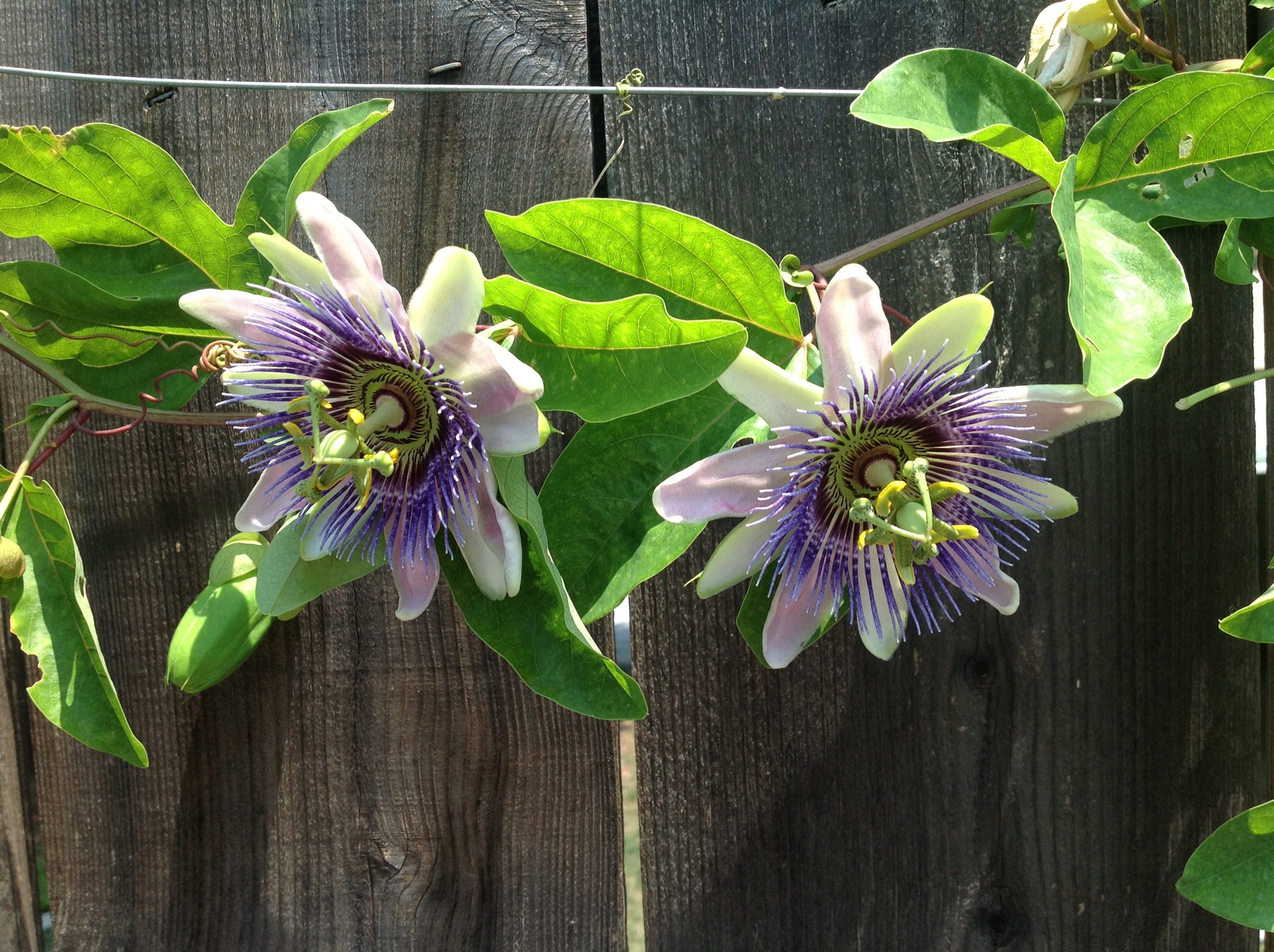
I’ve been writing too many poems about the garden. I started with the bougainvillea that refuses to bloom, before moving on to skunks and raccoons insistent upon digging tunnels under the fence at night in order to hunt for grubs, the carnage that comes about due to survival of the fittest, and, more recently, a red coral tree that has made a spectacular comeback after nearly being killed off by last winter’s cold spell.

Sometimes I worry my work isn’t “heavy” enough. The garden does feel like a luxury in the face of the terrible problems taxing our world. Yet when I have a breather, and I find myself staring at plants, words often begin to crest. That’s when I head for the computer.

photo-1

I started yearning for a garden shortly after moving to San Diego. I would take long walks in my neighborhood, only to find myself ogling people’s yards. Not only does this climate sustain a truly interesting selection of flora (it’s easy to see where Dr. Seuss found inspiration for his quirky plants), it is possible to set up a garden so that something is blooming at any given time of the year. That’s an exciting prospect for someone used to a more traditional winter.

In the end, I have the Water Conservation Garden at Cuyamaca College to thank for the fact that my own yard now supports a xeriscape garden in lieu of lawn. Cuyamaca’s garden is a teaching garden, one that encourages the use of drought tolerant plants and innovative landscape design. Students and non-students alike spend hours within its fences, taking notes on various plants, not to mention low-water gardening techniques. Indeed, the fellow who initially put in my garden is a graduate of Cuyamaca’s Ornamental Horticulture program.

My landscape designer gave me a beautiful start—then he gave me the reins. I quickly became worried that I would not have the ability, time, or inclination to keep up my garden. Lawns are a no brainer, but nudging plants to grow into pleasing shapes and color schemes takes some doing. To be sure, some of my favorite plants died early—some did not fulfill their promise. I have struggled over finding good replacements. I’m not sure I’m putting them in properly. Pruning confounds me (I generally feel like a butcher). I can handle the weeds, but I don’t like the pests. In the end, I often think about what I have not yet done with the yard. I know I could go further. I have friends who would have by now.

But really, do I have to keep up with the Joneses? We’re talking about a garden here. Secretly, I like its in-progress state. It will probably never be manicured to perfection. It generally displays a measure of unkemptness, which I tend to ignore until I can no longer stand it (sort of like my hair). I do occasionally meditate on benches, hanging art, chimes, statuary, and other accents I might add. I’m sure I’ll get to it someday.

My garden has come with some surprises. It does require less water than a lawn. And setting all of those aforementioned insecurities aside, it really hasn’t been difficult to maintain. I generally roll up my sleeves every four to six weeks to weed and prune. I particularly like to tinker outside after a stressful week at work, as I am reminded that not all creatures are on the clock—time can stretch in a different direction.

Most weekends, however, I sit in the garden cradling a cup of coffee as I stare at hummers particularly drawn to the Mexican sage. The Mexican sage sure is a trouper. I’ve decided that when all else fails, put in some Mexican sage. It’s been in bloom for months.

Treading Lightly

Running took hold of me in the late 70s. I actually got started at Ashland High School, in Ashland, Oregon. I joined the girl’s JV cross-country team (remarkably, we had enough female runners for two teams in that relatively small school). It wasn’t long before I was pouring over the annual shoe issue of Runner’s World. On special occasions, I began receiving accessories, such The Complete Runner’s Day-by-Day Log and Calendar by James Fixx. And I could generally be found – rain, ice, or shine – running through Lithia Park.

I learned a great deal from that cross-country season. In the end, however, I decided I wanted to run for the joy of running—not racing. Though I occasionally entered a road race after that, I spent most of my time appreciating the scenery. Indeed, some of my fondest memories of Ashland center on running the back roads.

I continued running in Eugene, where you could actually cross paths with the likes of Mary Decker and Alberto Salazar, as they trained in residential areas. You could also view Salazar’s shoes in the Oregon Electric Station, a popular restaurant co-owned by the said runner. Sadly, I missed out on the Steve Prefontaine phenomenon by half a dozen years or so. Believe me, I know I missed out, because I kept hearing stories about how the fans went wild whenever he burned up the track in Hayward Field. People in Oregon still tell these stories.

At the University of Oregon, I discovered dance, and after a few years of trying to run and take dance classes, I let go of running. I figured my Teutonic build (my Teutonic joints) could handle only one of these activities. The years passed, and dance also had to go. I was living in Seattle then—quickly becoming a couch potato. I did make weak attempts to stay in shape on a Stairmaster. Of course you can only do so much walking in the rainy weather.

Since I’ve moved to San Diego, I’ve been in and out of the Y at predictable intervals. I’m not sure I’m getting anywhere. As menopause approaches, so do the pounds. I finally decided to pull myself up short and tune into the sixteen-year-old runner. My Teutonic joints no longer allow me run on pavement, but I thought I might get a good routine going on a treadmill (with the second thought that if I built enough strength and flexibility, I might be able to take an occasional run on the beach).

It’s been a long time since I was sixteen.

Back then I quickly learned that if I could slog through the first three weeks, a runner’s high would finally show up. From that point on, running would actually be fun. This time, however, the first three weeks found me struggling with plantar fasciitis (a problem that surfaced five years ago), not to mention sore knees, and overall stiffness.

As an older person it is tough to know just where to place your edge. You don’t want to give in after the first morning that makes you feel like you’ve been hit by a truck. Soreness and stiffness can be handled with age-appropriate workout goals; though it certainly becomes discouraging to remember a time such challenges did not come up. There does seem to be a happy medium between a rigorous fitness routine and debilitation. I’m still trying to figure out where that line is.

Meanwhile, my thoughts drift back to those athletes in their sixties and seventies who once ran in the same road races I entered as a young adult. Perhaps my Teutonic build will prevent me from enjoying such achievements. For now, I’ll relish the abbreviated runner’s high that has finally decided to appear as I try not to watch the minutes pass on the treadmill monitor.

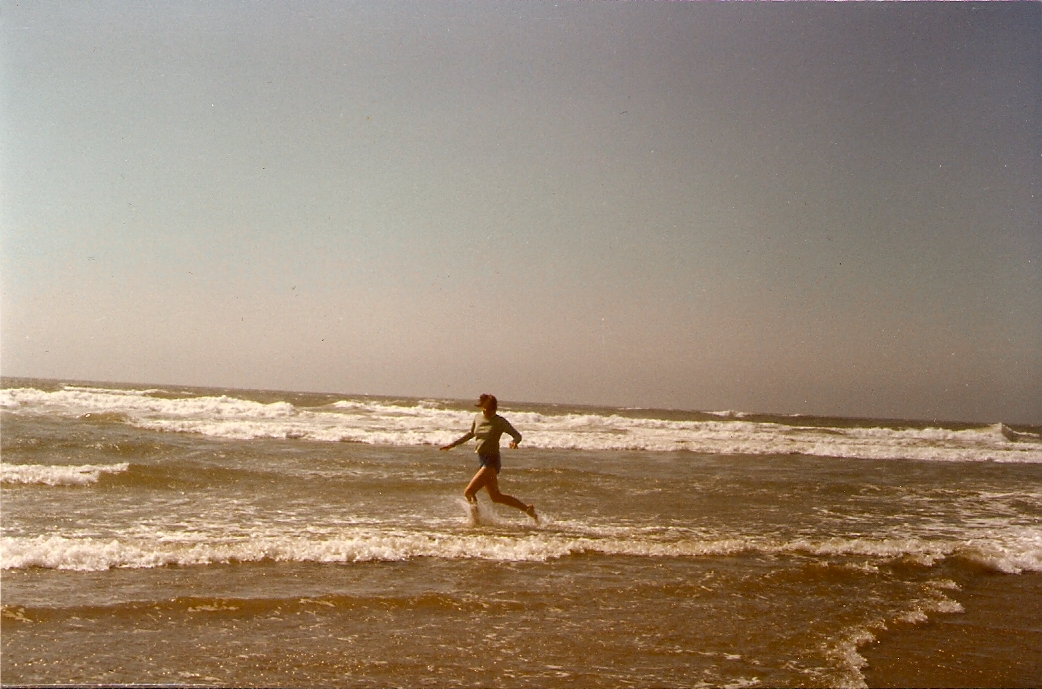
Running on the Oregon Coast.

Running on the Oregon Coast.

Fitting it All in

I recently saw a San Diego Repertory Theatre production, A Weekend with Pablo Picasso, directed by Todd Salovey. There is much to say about this marvelous one-man show, starring Herbert Siguenza—he plays Picasso. It is certainly a worthy pick for artists – of any kind – in search of inspiration. Yet I want to focus on one Picasso’s comments in the play (I have no idea if the actual artist actually said it or not). Picasso says something to the effect that a painter should paint for a living—not try to support his painting by working in another profession. In other words, a painter paints. Of course, most of us don’t have the luxury being able to earn a decent paycheck through some kind of art form. And those who do attempt to hold on to a viable job, as we pursue our dream on the side, face a number of challenges.

My biggest problem has always been the nuisance of fits and starts, a form of debilitating impotence. Time isn’t everything. One of my writer friends once warned me that a sea of time doesn’t necessarily mean a writer will get more done. She thought a challenging schedule could actually spur a writer to get down to it, be more prolific, even. To her mind, a tight schedule left no room for procrastination. Still, I have wondered how much more work I would have completed by now if I hadn’t had to make a living. It can be frustrating to reach out for a shooting star—feel the thrill of a new direction—only to watch it fizzle out.

To be sure, I am usually taken aback when a fresh sense of momentum leans into my writing—momentum that can feel like heat or heightened living. It can appear effortless—alive—like a true reason for living. Then, somehow, there is just too much to do, and all of that energy ends up yellowing in a drawer. If a lot of time passes, detachment disorder sets in, leaving only a shadowy memory of what was once enthusiasm. Of course, this enthusiasm might make a welcome return to begin a new project, even as it betrays the work that never came to fruition.

To ameliorate this type of struggle, I have found it is a good idea to fight for completion some of the time. Otherwise, the entire vow to write will threaten to slide into the garage, only to wait patiently for the next trip to Goodwill. Sometimes, I just set a specific goal and make that my sole reason for writing—instead of, say, well-crafted lines or crisp imagery. I’m much happier, though, when it feels like I’m working inside a kiln, and I don’t need any reason for writing except the pure joy of it. That phenomenon doesn’t come about every day. Besides, a startling sense of joy is tough to run through the juicer when the nitty-gritty hassles of work demand to be the top five priorities.

School is back in session, and I haven’t written anything new in weeks. My house, my mind, and my schedule have been too cluttered. As I already noted, I did make it to the theater. I sat in that darkened space watching Picasso dance before a set designed with the stuff of creativity—old shoes, vases, bicycle parts, paintbrushes, canvases, bread, and wine—and I could only feel envy for the life this artist must have led. For I am doing what he apparently warned against: I am living two lives, ultimately veering away from the source. I guess it’s time to start to learn how to fit these lives together.

Contemplating Lone Pine

I recently drove down I-395 with the friend I’ve known the longest, Rebecca Owings. We stopped in Lone Pine for the night. Rebecca and I were both in diapers when our respective families lived steps from the UC Davis campus. I have no idea how her late father would have reacted to Lone Pine. Yet I suspect his close friend—my late father—would have loved the western sensibility of the place, not to mention the Western movie lore that still adds to its mystique. Don’t get me wrong. My father went to Cal, and some, years later, became a passionate organic gardener focused on simple living and sustainability practices. Yet because he grew up in his own small western town, he could move through rural worlds as well as progressive ones—and he taught me to do the same. Indeed, in his youth, he was an avid reader of Westerns. I suspect he also took in a movie or two focused on gunslingers.

IMG_0070

My father’s hometown, Grass Valley, is situated north of Lone Pine in the Sierra Nevada foothills (on the west side of the range). It was a gold mining town—one my family visited regularly when I was a girl. Because of this, I often dreamed of effectively dipping a gold pan into some mountain stream. Back then I particularly enjoyed the nearby Malakoff Diggins State Historic Park, the site of a ghost town known as North Bloomfield, which once supported a large hydraulic mining operation.

1969Digginsset

The park displays a number of huge hydraulic nozzles that used to shoot water at nearby hillsides in order to root out the gold. My brother and I were known to romp around these antiques, even as we learned about how hydraulic mining had once flooded out some of the folks settled in the Sacramento Valley. As we were living down there in those days, this scenario made a huge impression on my young mind. We later learned that our great-grandfather, Charles Waite, had actually worked as a hydraulic miner. So we grew up hearing about one family member who was proud of his developing knowledge of environmental issues and another who had been proud of his mining profession.

The reason I believe my father would have truly enjoyed Lone Pine is because, somehow, the movers and shakers in its urban planning department have found a way to allow a vintage feel to persist there—without succumbing to too much modern cheese. Actually, the town has a 40’s and 50’s cheesy feel, and that’s what makes it wonderful. Indeed, Rebecca and I plan to return to the Dow Villa Motel, which was once one of John Wayne’s favorite haunts. Have no fear. He is adequately celebrated in the lobby.

IMG_0084

It is fun to think about John Wayne strolling around Lone Pine. Yet many disparate aspects of the West seem to converge in the Owens Valley, where the town is located. Working ranches are still in operation there. And the presence of the Big Pine Paiute Tribe can be felt in a number of businesses. The Manzanar National Historic Site, situated north of Lone Pine, bears witness to the Japanese American internment, which occurred during World War II. Finally, Lone Pine serves as the doorway to the Whitney Portal. Climbers from around the world regularly drive into town and turn onto the Whitney Portal Road in order to wind their way up to the trailhead—at 8365 feet—leading to the summit of the highest peak in the contiguous United States (14,505 feet).

IMG_0054

Maybe I like to meditate on the West, with a capital “W,” because I once took college class at the University of Oregon on Western American Literature. It actually stimulated some of my brain cells. For I was thrilled to discover we even had our own literature—novels, plays, and poems focused on some of the areas I knew so well. I quickly learned how a place—how a landscape—could inspire writers to come up with unique ways of defining the mind. There was something about that “Big Sky”—the mountains, the forests, the deserts, the lakes and rivers—that took writers into new dimensions. These places were stark or rugged or windy—or they were glinting with sunlight. Of course, western writers depicted crowded places, too, but such scenes somehow stood in contrast to all of those open spaces out there. Other musings came into play, such as a focus on self-sufficiency, physicality, obstacles that needed surmounting, and independence. While I’d surely enjoyed plenty of works about England before encountering this course, I found myself connecting with these ideas – outlined by Dr. Glen Love – in ways that seemed foreign to me.

The Western certainly figured into this literature. If I recall correctly, we read Shane by Jack Shaefer. Yet Dr. Love also steered us toward writers who had defined the West in their own ways, people like Robinson Jeffers, Raymond Chandler, Willa Cather, and A. B. Guthrie Jr. I later discovered a number of writers I would have included on the syllabus, such as Octavia Butler, Maxine Hong Kingston, Ken Kesey, and Sherman Alexie, among others. By then, I was no longer officially studying anything, but I occasionally thought about how my own life was unfolding on a western edge.

IMG_0087

I guess I could say my travels along I-395 have seriously cracked the topography of my childhood. I grew up in a valley with the Sierras on one side and the Coastal Range on the other; for many years, I couldn’t imagine another world. To be sure, the length of my life has played out along a strip that lies west of the Sierras and the Cascades. While I did spend a summer in Eastern Oregon when I was teenager—and I drove over the Cascades more than once during my time in Washington State—I never ventured to the other side of the Sierras until a few years ago. Seeing the dramatic lift of this mountain range, as it appears from an eastern vantage point, rocked something inside of me. Because the Sierras I knew grew gently. We always drove through rolling hills before finding ourselves on steeper inclines. Yet I found the Eastern Sierras to be some serious mountains—the very same ones—much more intimidating. I’m not sure if I have more to say about this side of the Sierras just yet. These vistas have been filed away for future contemplation.