My poem, “Snake in the Library,” has been published in Helen: A Literary Magazine Friday Night Specials.
Tag Archives: Poetry
Three Poems in Riding Light
My poems, “Little Song, “Practice I,” and “Practice II,” have just been published in the Music issue of Riding Light.
Stepping Out – A Balance Sheet
Two years ago I celebrated the release of my first book of poetry, Voice Break, on my fiftieth birthday. It was self-published, which made it seem like less of a milestone than landing a book contract—yet it felt like a milestone, nonetheless. I had been opening rejection letters on two novel manuscripts (some with encouraging comments) for close to twenty years. I’d even had an agent for a time.
Like many writers, I’d turned up my nose at self-publishing. The word wannabe can’t help but tag behind. Yet I decided to take this step after one of my advisers in Pacific University’s MFA program read my manuscript. In essence, he told me to come up with a musical cover and publish it. I’m pretty sure he was envisioning a chapbook, but I decided to take advantage of the growing frenzy over CreateSpace to see if I liked the way the process worked. I figured I didn’t have much to lose. The manuscript was quirky, and I sensed it wouldn’t sit well with a traditional publisher. It was probably too short to boot.
In the end, I found the process unexpectedly gratifying. I loved having editorial control! I loved choosing the cover and other design elements. And I loved the absence of deadlines—it wasn’t finished until I thought it was finished.
Once the book was released, I put on my PR hat and managed to capture a little attention in the news. I ended up selling copies to friends and a few generous strangers, but I must admit, my sales never proved to be brisk.
Meanwhile, I began to face a second manuscript, The Ballad of the New Carissa and Other Poems. As there aren’t a lot of ballads being written these days, I figured it would also be hard to place. So I repeated the process with CreateSpace and pretty much ended up with the same results. As an aside, both books were covered by media outlets in Eugene and Newport, Oregon. I was happy with that.
Problem is, poetry doesn’t sell. About the time I was waiting to learn how my own sales would go, I encountered an article in Publishers Weekly, entitled “Measuring the National Book Award Sales Effect”, which focuses on how many additional copies an award winner could expect to unload. I was surprised to learn the winner in the poetry category, David Ferry, had sold roughly 2000 copies of his book Bewilderment. While Ferry’s numbers had actually tripled due to his badge of honor, this number was sobering indeed.
Even so, I don’t regret stepping out. Poets have always found creative ways to make their work available. Or they have enlisted tiny presses to do it for them.
I can recall weeding books during the nineties in the Ballard branch of the Seattle Public Library, where I worked as a librarian, only to stumble upon an early effort by Sherman Alexie (I can no longer remember which one it was). It caught my eye, because Reservation Blues had just made him a star. I think I stood there imagining his early days as a writer, the loving attention he put into the book I held in my hands—one I probably wouldn’t have noticed if Reservation Blues hadn’t come along.
My two books are now housed in a couple of libraries. And due to print-on-demand technology, they are still available for sale through online vendors, should anyone else ever decide to take an interest in them. To my mind, this benefit of the print-on-demand process is probably the best reason to go the self-publishing route. A book can conceivably take all the time in the world to make its way into the consciousness of readers (instead of being remaindered and forgotten). The downside, of course, is that self-published books tend to be ignored by sponsors of literary contests, not to mention librarians and reviewers. I’m still wondering if anyone ever solved the riddle presented in Voice Break, a riddle that also serves as a turn of sorts. In any event, I’ve gone on to test the traditional route. I’ve already enjoyed some success with placing individual poems in literary journals. Perhaps this will ultimately lead to a third manuscript worthy of a good old-fashioned publisher.
Poetry may not sell, but it certainly isn’t dead. Last week I attended a Meet the Poets gathering in the Mission Hills branch of the San Diego Public Library. I was there to share one of my poems, which had recently been published in The San Diego Poetry Annual. The room was packed. Our moderator, Curran Jeffery, quickly ascertained for the record that most of the people in the audience were not poets or writers, but had attended solely to listen to the twenty or so of us preparing to read.
2013 Soul Making Literary Awards Reading
Video
Poem in Labletter Monthly Notes
My poem, “The Gull,” has been published in Labletter Monthly Notes.
Keeping up with the Garden
I’ve been writing too many poems about the garden. I started with the bougainvillea that refuses to bloom, before moving on to skunks and raccoons insistent upon digging tunnels under the fence at night in order to hunt for grubs, the carnage that comes about due to survival of the fittest, and, more recently, a red coral tree that has made a spectacular comeback after nearly being killed off by last winter’s cold spell.
Sometimes I worry my work isn’t “heavy” enough. The garden does feel like a luxury in the face of the terrible problems taxing our world. Yet when I have a breather, and I find myself staring at plants, words often begin to crest. That’s when I head for the computer.
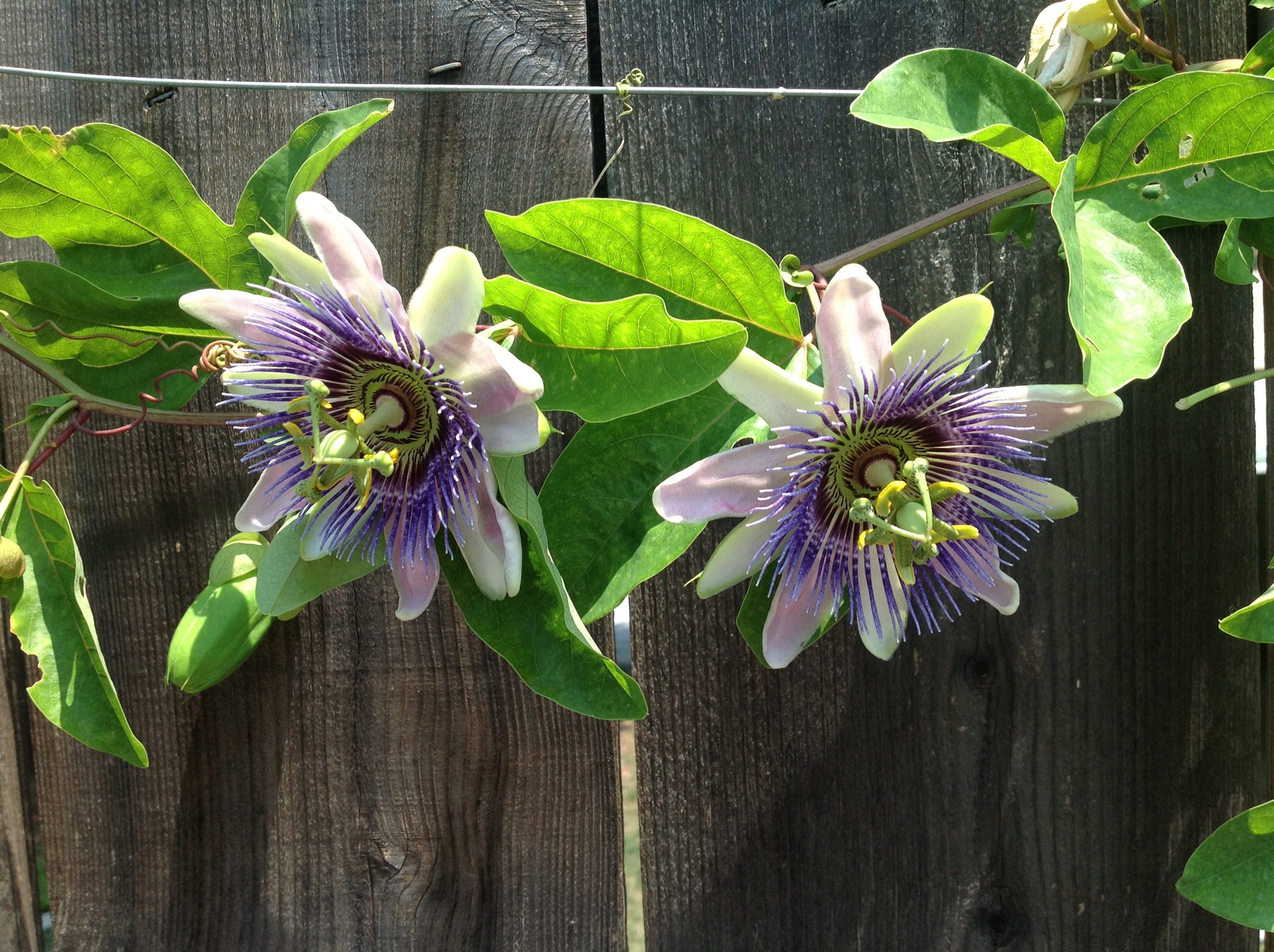
I started yearning for a garden shortly after moving to San Diego. I would take long walks in my neighborhood, only to find myself ogling people’s yards. Not only does this climate sustain a truly interesting selection of flora (it’s easy to see where Dr. Seuss found inspiration for his quirky plants), it is possible to set up a garden so that something is blooming at any given time of the year. That’s an exciting prospect for someone used to a more traditional winter.
In the end, I have the Water Conservation Garden at Cuyamaca College to thank for the fact that my own yard now supports a xeriscape garden in lieu of lawn. Cuyamaca’s garden is a teaching garden, one that encourages the use of drought tolerant plants and innovative landscape design. Students and non-students alike spend hours within its fences, taking notes on various plants, not to mention low-water gardening techniques. Indeed, the fellow who initially put in my garden is a graduate of Cuyamaca’s Ornamental Horticulture program.
My landscape designer gave me a beautiful start—then he gave me the reins. I quickly became worried that I would not have the ability, time, or inclination to keep up my garden. Lawns are a no brainer, but nudging plants to grow into pleasing shapes and color schemes takes some doing. To be sure, some of my favorite plants died early—some did not fulfill their promise. I have struggled over finding good replacements. I’m not sure I’m putting them in properly. Pruning confounds me (I generally feel like a butcher). I can handle the weeds, but I don’t like the pests. In the end, I often think about what I have not yet done with the yard. I know I could go further. I have friends who would have by now.
But really, do I have to keep up with the Joneses? We’re talking about a garden here. Secretly, I like its in-progress state. It will probably never be manicured to perfection. It generally displays a measure of unkemptness, which I tend to ignore until I can no longer stand it (sort of like my hair). I do occasionally meditate on benches, hanging art, chimes, statuary, and other accents I might add. I’m sure I’ll get to it someday.
My garden has come with some surprises. It does require less water than a lawn. And setting all of those aforementioned insecurities aside, it really hasn’t been difficult to maintain. I generally roll up my sleeves every four to six weeks to weed and prune. I particularly like to tinker outside after a stressful week at work, as I am reminded that not all creatures are on the clock—time can stretch in a different direction.
Most weekends, however, I sit in the garden cradling a cup of coffee as I stare at hummers particularly drawn to the Mexican sage. The Mexican sage sure is a trouper. I’ve decided that when all else fails, put in some Mexican sage. It’s been in bloom for months.
The Post-MFA Doldrums
I waffled for years over the MFA possibility before I found myself checking into the dorms. With three novel manuscripts beyond the first draft stage under my belt, I knew I was disciplined enough to stick to a writing schedule, even as I remained committed to my official career. No, I wasn’t worried about discipline. In my daily life I was struggling with a sense of isolation as I interacted with educators and librarians, but very few writers. The MFA program offered through Pacific University provided the writing nest I craved, not to mention another genre to work on, and I didn’t look back.
Not only did a new pile of poems continue to grow on my computer, one instructor encouraged me to put a musical cover on Voice Break and publish it. While he was no doubt thinking of a chapbook, I decided to take the plunge with CreateSpace in order to produce a print-on-demand paperback. This process was so sustaining, I followed suit with a book that included “The Ballad of the New Carissa,” as I figured a traditional poem running close to 3000 words would be a challenging to place.
Now I’m in the post-MFA doldrums, trying to feed my writing life on my own once more, not to mention get work out there. Fortunately, one of my fellow students lives in the area, and we’ve started our own writing group. And I finally stepped foot into the San Diego Writers, Ink facility, an edgy loft in downtown San Diego where workshops are regularly conducted (I am currently taking a poetry class from Steve Kowit).
While I’ve had plenty of poems tucked away for some time now, I’d been avoiding the publishing process, because I was already burnt out from trying to publish my two of my novels. Yet after filing my diploma away, I figured my poetry writing degree would go to waste if I didn’t try to place some of my work. I just wasn’t completely sure of how to go about it.
I did get lucky in the beginning, so I decided to tackle the whole process methodically. I took a stab at entering as many contests as I could find (no wins yet). Then I decided to submit almost every viable poem I’d written to one journal or another. I quickly learned that I was indeed lucky with those first submissions. As the rejections came pouring in, I decided I should probably just submit my best poems (if only I could determine which ones those were). A bunch of these pieces are currently “pending response,” and many have already been rejected.
Duotrope, an online writing resource, has become indispensible in this whole process. Their submissions tracker, which costs $50 a year, allows writers to easily organize submissions in an online database. This service also provides invaluable, up-to-date, information on literary publications. With a few keystrokes, a writer can quickly determine where they’ve sent any given piece, as well as figure out how long a particular publication has held it.
Their weekly poetry newsletter has inspired me to try yet a third approach: to focus on journals soliciting themed submissions. Today, for example, I submitted poems to publications looking for poetry on Harbors & Harbor Towns, Rebirth, Sound, and finally, Trash and Treasure. We’ll see if this method increases my odds.
As for the novels, well… I’ve got to get back to them. When I entered the MFA program, I already possessed several file folders full of rejections on the first two. I was definitely fishing for a reason to continue as I focused on the joy of poetry writing in graduate school.
I’ve now had ample time to lick my wounds, so I figured it couldn’t hurt to enter my second novel manuscript into some viable young adult novel contests (it does feel good to get back to this). IMHO, my first novel needs to be completely revamped (on the to-do list). And the last one was never finished (also on the to-do list).
Ah, discipline.
It’s been almost a year since I’ve graduated from Pacific University, and I continue to feel a certain momentum egging on my writing life. Let’s see if it holds up.
Book Trailer
Video
I dipped a toe in and created a book trailer for The Ballad of the New Carissa and Other Poems.
 Voice Break